Emergency & Protective Services

The Emergency & Protective Services program prepares students for careers dedicated to protecting and serving their communities. Each year, fires, medical emergencies, and public safety incidents impact thousands of lives. Emergency responders are often the first on scene — providing critical care, managing dangerous situations, and ensuring public safety.

This program offers comprehensive, hands-on training for students interested in pursuing careers in emergency medical services (EMS), law enforcement, firefighting, industrial safety, and emergency management.

Students gain real-world experience alongside industry professionals while developing foundational knowledge and practical skills in:
Emergency response procedures, Public safety operations, Fire science fundamentals, Law enforcement basics, Emergency medical response, Incident management systems, Communications and report writing, Public speaking and leadership, Physical readiness training, and more!

Students learn to remain calm under pressure, think critically in high-stress situations, and act decisively in service to others. The program emphasizes leadership, teamwork, professionalism, and a strong commitment to community well-being.

Graduates leave prepared to continue their education or enter the workforce in public safety fields with a solid foundation of technical skills and industry credentials.
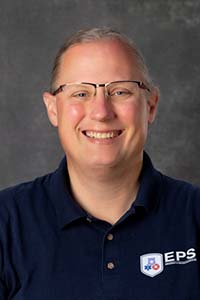
Mr. Stein
POssible Careers
  • Police, Fire & Ambulance Dispatchers
  • Immigration & Customs Inspectors
  • Intelligence Analysts
  • Police Patrol Officers
  • Criminal Justice & Law Enforcement Teachers Postsecondary
Potential Certifications
  • American Heart Association CPR/AED
  • American Heart Association First Aid
  • Emergency Medical Responder (EMR)
  • National Emergency Responder Certification
  • National Incident Management Systems Certification (NIMS 100,200,700 & 800)
  • Hazardous Materials for First Responder Awareness Certificate (HAZMAT)
  • OSHA-10
  • Employability: Interviewing Skills
Articulated Credits
Post Secondary & Continued Education
  • Employment
    • Firefighter
    • Emergency Medical Responder
    • Security Officer
  • Further Certifications
    • Police Academy
    • Emergency Medical Technician
    • Paramedic
  • Assoc. Degree
    • Criminal Justice
    • Fire Science
  • B.S.
    • Criminal Justice
    • Fire Science
    • Homeland Security
    • Emergency Management
  • Graduate
    • Criminal Justice
    • Homeland Security
    • Emergency Management

Skill Alignment & CIP Code

Program Safety & Physical Considerations

  • Able to lift 50 pounds & up to 100 pounds
  • Ability to work independently
  • Able to work under pressure/in adverse conditions/within time constraints
  • Good conflict resolution skills & an even temperament (not prone to aggressive behaviors)

Essential APTITUDES for This Lab – Recommended Levels

  • Math Skills
  • Basic Chemistry, Biology, Physics, Health Science
  • Reading Comprehension
  • Motor/hand/foot/eye coordination
  • Verbal Communication
  • Critical thinking
  • Social Perceptiveness
  • Judgement & Decision Making
  • Complex Problem Solving
  • Coherent Clear Writing Skills

Reading

  • Explain the main ideas or draw accurate conclusions after reading text
  • Follow a complex multi–step procedure independently
  • Analyze and evaluate the effectiveness of an author’s argument, including whether the structure makes points clear, convincing, and engaging
  • Evaluate how words and phrases shape meaning and tone in texts
  • Comprehend written text and apply it to understand tables, charts, and other visuals
  • Learn and apply content–specific symbols, abbreviations, and acronyms correctly
  • Apply content–specific vocabulary correctly
  • Identify and explain how different ideas connect throughout text
  • Read and understand diagnostic and schematic data to solve a problem
  • Compare & contrast information in a text
  • Summarize information from different written resources
  • By the end of grades 9–10 & 11–12 read & comprehend technical texts independently & proficiently
  • Evaluate the hypotheses, data, analysis & conclusions in technical text
  • Textbook: Essentials of Fire Fighting, Seventh Edition, Average grade reading level: 15.26

Writing

  • Write with a sharp, distinct focus identifying topic, task, and audience
  • Develop and analyze the topic with relevant, well–chosen, and sufficient facts, extended definitions, concrete details, quotations, or other information and examples appropriate to the audience’s knowledge of the topic
  • Use precise language and domain–specific vocabulary, to manage the complexity of the topic
  • Establish and maintain a formal style and objective tone while attending to the norms of the discipline
  • Produce clear & coherent writing
  • Constructively evaluate arguments while fairly supplying evidence to justify different viewpoints
  • Develop and strengthen writing by brainstorming, revising, editing & rewriting
  • Write with awareness to audience using program–specific vocabulary
  • Write routinely over short/long time frames for a range of tasks, purposes & audiences
  • Clearly convey with precision step–by–step work completed
  • Write fast–paced, accurate medical and police reports
  • Use technology to produce, publish or share writing

Math Levels

Numbers and Operations:

    • Grade 6 – Fluency in operations with whole numbers and decimals
    • Grade 6 – Fraction computations
    • Grade 6 – Whole number exponents
    • Grade 7 – Fraction to decimal conversion
    • Grade 7 – Percent and ratio problems
    • Grade 8 – Decimals to rational number (fraction) conversion
    • Grade 8 – Estimate the value of irrational numbers.
    • Algebra 1 – Problem solving with real world units, including conversions

Measurement:

    • NG – Units: English and Metric Precision: Nearest 1 mm
    • Grade 6 – Unit conversion within and between measuring systems
    • Grade 7 – Area, volume surface area of objects composed of triangles, quadrilaterals, polygons, and right prisms
    • Grade 7 – Area and circumference of a circle
    • Grade 8 – Volume of cone, cylinder, sphere
    • Geometry – Apply volume formulas – including pyramid

Algebraic Concepts:

    • Grade 6 – One–step equation solutions – one variable with all non–negative components
    • Grade 7 – Two–step equation solutions – one variable
    • Grade 8 – Slope
    • Grade 8 – Linear relationships – rate of change and initial value – analyzing meaning

Geometric Concepts

    • Grade 7 – Angle measure problems (supplementary, complementary, adjacent, angles of a triangle, parallel lines cut by transversal)
    • Grade 7 – Scale drawings of geometric figures
    • Grade 8 – Pythagorean Theorem

Data and Probability:

  • Algebra 1 – Interpret data on various displays – use to make predictions
  • Geometry – Scale models and drawings

Theory Time

  • 2.5 hours/day

Homework

  • 1 hour/week

Lab Time

  • 3 hours/day

Tests

  • At least one written exam per chapter
  • At least one practical exam per chapter
  • Industry Certifications
    • OSHA 10
    • PA Emergency Medical Responder (PA EMR)
    • National Incident Management Systems Certifications (NIMS 100, 200, 700, & 800)
    • Hazardous materials for First Responder Awareness Certificate (HAZMAT)
    • NOCTI (mandatory for all CTE programs)

POS Academics and Electives Recommended

  • College Prep English & Math are a component of the DCTS program

Study & Other Skills

  • Attention to detail
  • Good attendance
  • Basic computer & keyboarding skills
  • Clean criminal background check
  • Demonstrate initiative, responsibility, time management, & critical thinking skills
  • Good physical health & neat appearance
  • Memorization & note/test taking skills

Technology Skills/Knowledge

  • Use and navigate school–issued laptop
  • Web navigation
  • Database navigation
  • Email management
  • Navigate learning management system and instructional technology tools
  • Video conferencing