Cosmetology

The Cosmetology program focuses on the fundamentals of the profession. This enables students to confidently begin working with hair, skin, and nails early in their training. Technical skill development blends with applied sciences to guide them toward a successful career as a salon professional. During this three-year, 1250-hour training program, students learn hair sculpture, color application, chemical texture, and skin and nail procedures. Students study a wide variety of scientific applications, such as the chemistry of cosmetics, biology, human anatomy, and physiology. Upon completion, graduates are fully prepared to take the Pennsylvania State Board of Cosmetology examination.

Students learn the history and career opportunities of Cosmetology. Topics of study include Life Skills, Professional Image, Communicating for Success, Infection Control: Principles and Practices, Basics of Electricity, Properties of the Hair and Scalp, Principles of Hair Design, Scalp Care, Shampooing & Conditioning, Hairstyling, Braiding and Extensions, Hair Cutting, Hair Removal, Facials, Make-up, Manicuring, and Pedicuring.

* Students must successfully complete the 1250 hour training program to qualify for the Pennsylvania State Board of Cosmetology Examination.
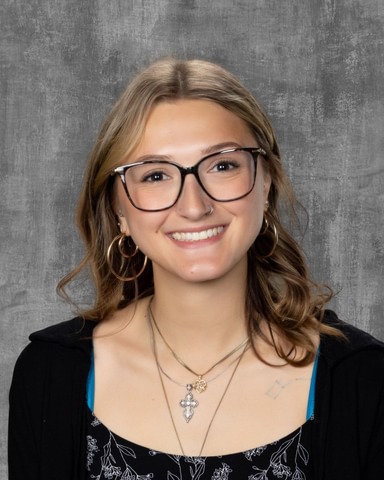
Ms. Zart
POssible Careers
  • Hairdresser, Stylist & Cosmetologist
  • Nail Specialist
  • Makeup Specialist
  • Braidery Specialist
  • Skincare Specialist
  • Vocational Education Teachers, Postsecondary
  • Career/Technical Education Teachers, Secondary School
Potential Certifications
  • Cosmetology License
  • Barbicide Certification
  • Employability: Interviewing Skill
  • OSHA-10
Articulated Credits
Post Secondary & Continued Education
  • Post–secondary manager certification
  • Specialized study and certification as a Massage Therapist, Esthetician, Make–up Consultant, Theatrical Make–up Artist, and specific coiffures.

Skill Alignment & CIP Code

Program Safety & Physical Considerations

  • Ability stand for long periods of time
  • Ability to work with strong chemical odors (breathing and skin reactions)
  • Good hand/eye coordination
  • Ability to work through and pass a series of self–paced occupational safety modulars

Essential APTITUDES for This Lab – Recommended Levels

  • Color discrimination
  • Finger & manual dexterity
  • Active listening, speaking skills
  • Social perceptiveness
  • Manual dexterity
  • Excellent attendance
  • Basic knowledge of Chemistry
  • Ability to learn and understand Anatomy

Reading

  • Explain the main ideas or draw accurate conclusions after reading text
  • Learn and apply content–specific symbols correctly
  • Apply content–specific vocabulary correctly
  • Identify and explain how different ideas connect throughout text
  • Comprehend written text and apply it to understand tables, charts, and other visuals
  • Compare & contrast information in a text
  • Summarize information from different written resources
  • Follow a complex multi–step procedure independently
  • By the end of grade 10 read & comprehend technical texts independently & proficiently.
  • Textbook: MILADY: Average grade reading level of 12.73

Writing

  • Write different types of essays such as: informative & explanatory focused on program specific content
  • Produce clear & coherent writing
  • Writing accurate step–by–step instructions
  • Accurate note–taking skills
  • Develop and strengthen writing by brainstorming, revising, editing & rewriting
  • Write routinely over short/long time frames for a range of tasks, purposes & audiences
  • Use technology to produce, publish or share writing

Math Levels

Numbers and Operations

    • Grade 6 – Fluency in operations with whole numbers and decimals
    • Grade 6 – Fraction computations
    • Grade 7 – Fraction to decimal conversion
    • Grade 7 – Percent and ratio problems
    • Grade 8 – Decimal to rational number (fraction) conversion
    • Algebra 1 – Problem solving with real world units, including conversions

Measurement

    • Units: English and Metric Precision: length – 1/2 inch, volume – ml/oz
    • Grade 6 – Unit conversion within and between measuring systems

Geometric Concepts

  • Grade 7 – Scale drawings of geometric figures
  • Geometry – Scale models and drawings

Theory Time

  • 5 hours/week

Homework

  • 1 hour/week

Lab Time

  • 9th–11th grades: 5.5 hours/week
  • 12th grade: 9 hours/week

Tests

  • 10 tests/quizzes per quarter
  • Quarterly Assessments
  • Math Literacy Assessments
  • Industry Certifications
    • OSHA
    • Cosmetology State Board Exam

POS Academics and Electives Recommended

  • English & Math are a component of the DCTS program

Study & Other Skills

  • Excellent attendance
  • Note taking skills
  • Ability to learn a task via directions and pictures

Technology Skills/Knowledge

  • Use and navigate school–issued laptop
  • Web navigation
  • Email management
  • Navigate learning management system and other instructional technology tools
  • Database navigation
  • Video conferencing